

NOVO NORDISK STOCK RESET IN 2025
Novo Nordisk (NVO / NOVO-B.CO) has faced a brutal 2025, with shares down over 50% year-to-date, currently trading around $50.63. The once high-flying GLP-1 leader is reeling from pricing challenges, slowing growth, and fierce competition from Eli Lilly’s tirzepatide portfolio. However, pipeline optimism remains: higher-dose Wegovy gained EMA support, Ozempic launched in India at scale, and the $4.7B Akero deal enhances its cardiometabolic pipeline. As of December 15, 2025, Novo Nordisk stock is up 0.9% intraday, as investors recalibrate long-term potential amid sector-wide valuation resets.



Today’s price action and trading context
Novo Nordisk’s American depositary receipt (ADR), ticker NVO, is trading at $50.63 as of December 15, 2025, representing a modest 0.9% daily gain. The stock has bounced off a recent intraday low of $49.53 but remains locked in a high-volatility pattern after a string of sector-wide corrections in the GLP-1 space.
Market recalibrates growth narrative
With 2025 shaping up to be the worst year in Novo Nordisk’s public history—shares down more than 50% from peak levels—the market is now recalibrating expectations. Formerly priced as a hyper-growth stock, NVO is now trading at a forward P/E of around 13x, reflecting a shift to more conservative, mature pharma-style multiples.
ADR price: $50.63 (+0.45)
Day range: $49.53–$50.63
52-week high/low: $108.50 / $47.82
Market cap: ~$225 billion
Trading volume: ~7.5 million shares (above average)
Despite today's slight rebound, analysts remain cautious. Near-term catalysts include an FDA decision on high-dose oral semaglutide and further clarity on Medicare pricing rules. Longer term, the focus is shifting to emerging assets like amycretin and Novo's strategic pivots into cardiovascular and kidney diseases.

Competitive pressure and pricing risks
The most significant headwinds for Novo Nordisk in 2025 have stemmed from intensifying competitive threats and global pricing reforms. The company has been consistently outflanked by Eli Lilly in GLP-1 innovation, particularly in terms of speed to market, formulation diversity, and clinical outcomes.
Lilly surges ahead in the obesity drug race
Zepbound dominance: Eli Lilly’s tirzepatide-based drug has captured major U.S. market share thanks to stronger efficacy and broader coverage.
Triple agonist threat: Retatrutide, Lilly’s next-gen candidate, is showing unprecedented weight loss (>24%) in trials, threatening Novo’s pipeline positioning.
Oral GLP-1 pipeline: Lilly’s progress on once-daily oral formulations has raised competitive pressure on Novo’s oral semaglutide line.
Global pricing pressure builds
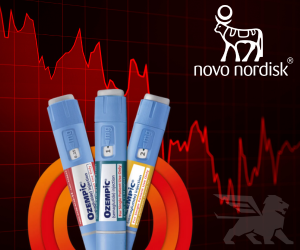
Novo Nordisk has been forced to engage in multiple pricing resets to defend market share and regulatory goodwill. In the U.S., Medicare price negotiations have led to downward revisions for Ozempic and Wegovy pricing starting in 2027. In India, Novo launched Ozempic at ~$24/week, reflecting a long-tail expansion strategy but pressuring margins in the near term.
U.S. pricing erosion: Four guidance cuts in 2025 cited margin pressure and compounded semaglutide sales.
Reimbursement changes: Ongoing policy shifts in Europe and the UK around exclusivity and data protection weigh on outlooks.
Generic fears: India launch partly anticipates the March 2026 semaglutide patent cliff.
While these actions expand access and future volume, investors remain wary of what this means for long-term profitability and brand value protection in Novo’s flagship semaglutide franchise.
Pipeline strength and recovery prospects
Amidst the stock’s freefall, Novo Nordisk is rebuilding investor confidence around its pipeline and diversification strategy. The December 9 acquisition of Akero Therapeutics for $4.7 billion expands Novo’s reach into non-alcoholic steatohepatitis (NASH) and cardiovascular disease—key growth verticals adjacent to its metabolic focus.
Positive momentum from late-2025 developments
Higher-dose Wegovy EMA opinion: The 7.2 mg Wegovy received positive CHMP backing on December 12, potentially offering 20%+ weight loss efficacy—setting the stage for early 2026 EU rollout.
India launch of Ozempic: While pricing is low, the move opens access to a population with over 100 million diabetics and serves as a model for global expansion.
Amycretin Phase 2 success: This GLP-1/GIP experimental drug outperformed expectations in diabetes and weight loss; Phase 3 trials are planned for 2026.
Oral semaglutide filing: FDA decision on 25 mg weight-loss formulation expected soon; this could materially shift convenience adoption rates.
Akero deal finalised: The acquisition bolsters Novo’s NASH portfolio, a high-need, under-treated category with blockbuster potential.
These positive catalysts come at a time when investor sentiment is fragile. The Alzheimer’s trial failure in November was a harsh reminder of the limits of semaglutide outside metabolic applications. However, management is now doubling down on cardiovascular and renal indications, where its existing safety profile and market leadership can support faster adoption.
Looking ahead to 2026, Novo Nordisk’s ability to compete effectively with Lilly, manage pricing headwinds, and deliver on its pipeline will determine whether the current valuation offers a recovery play or signals a deeper structural slowdown. The upcoming Q4 earnings (expected February 4, 2026) will provide critical insight into execution and margin trends.